Tea in Azerbaijan: pear-shaped glasses, samovars and a cup that never runs dry
Britain and Azerbaijan both run on tea, but they drink it very differently. Here is what to expect in an Azerbaijani home, and how to try it in your own kitchen.
Britain is a nation of tea drinkers. By the UK Tea and Infusions Association’s count we get through around 100 million cups a day, most of them strong, black and finished with a splash of milk.
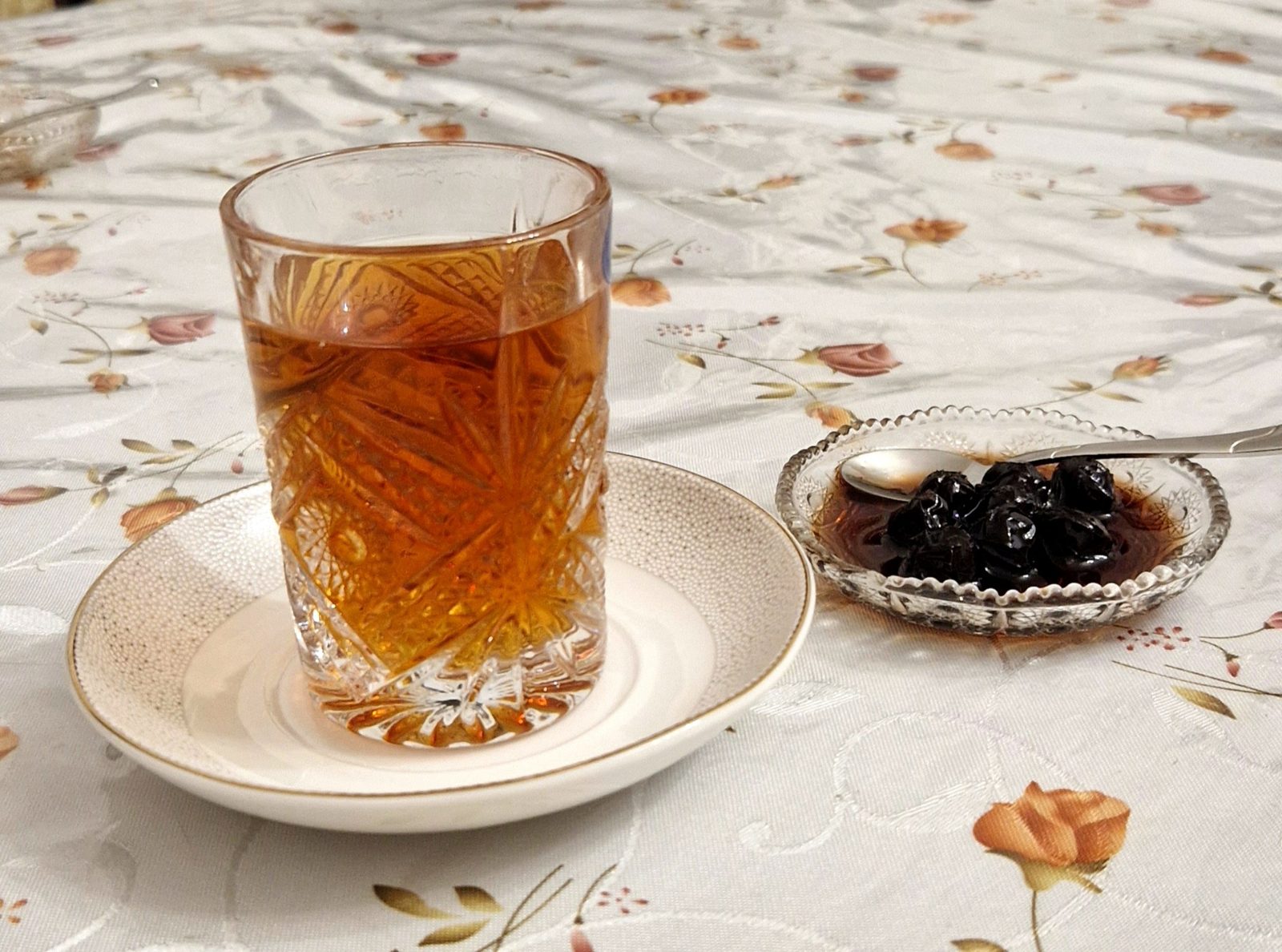
So you might expect a British visitor to feel at home in Azerbaijan, a country of about ten million people on the western shore of the Caspian Sea, where tea is poured from breakfast until long after dark. In many ways they do. But the first glass often brings a small surprise. There is no milk. There is no mug. And there may well be a saucer of cherry jam where you expected the sugar bowl.
So what makes Azerbaijani tea different, and why does it matter so much to the people who drink it?
Is tea really that important in Azerbaijan?
In a word, yes. Tea (çay, pronounced “chai”) is the first thing offered to a guest, the drink that opens a business meeting and the excuse for a long evening with the neighbours. Saying no to a glass isn’t rude, exactly, but it can feel a little like refusing a handshake.
The custom is old enough, and loved enough, that in 2022 UNESCO added the “Culture of Çay” to its list of the world’s intangible cultural heritage, in a joint nomination from Azerbaijan and Türkiye. The listing calls tea a symbol of identity, hospitality and social interaction. Most Azerbaijanis would agree, though they would rather tell you over a glass than in a document.
Why is the tea served in a glass?
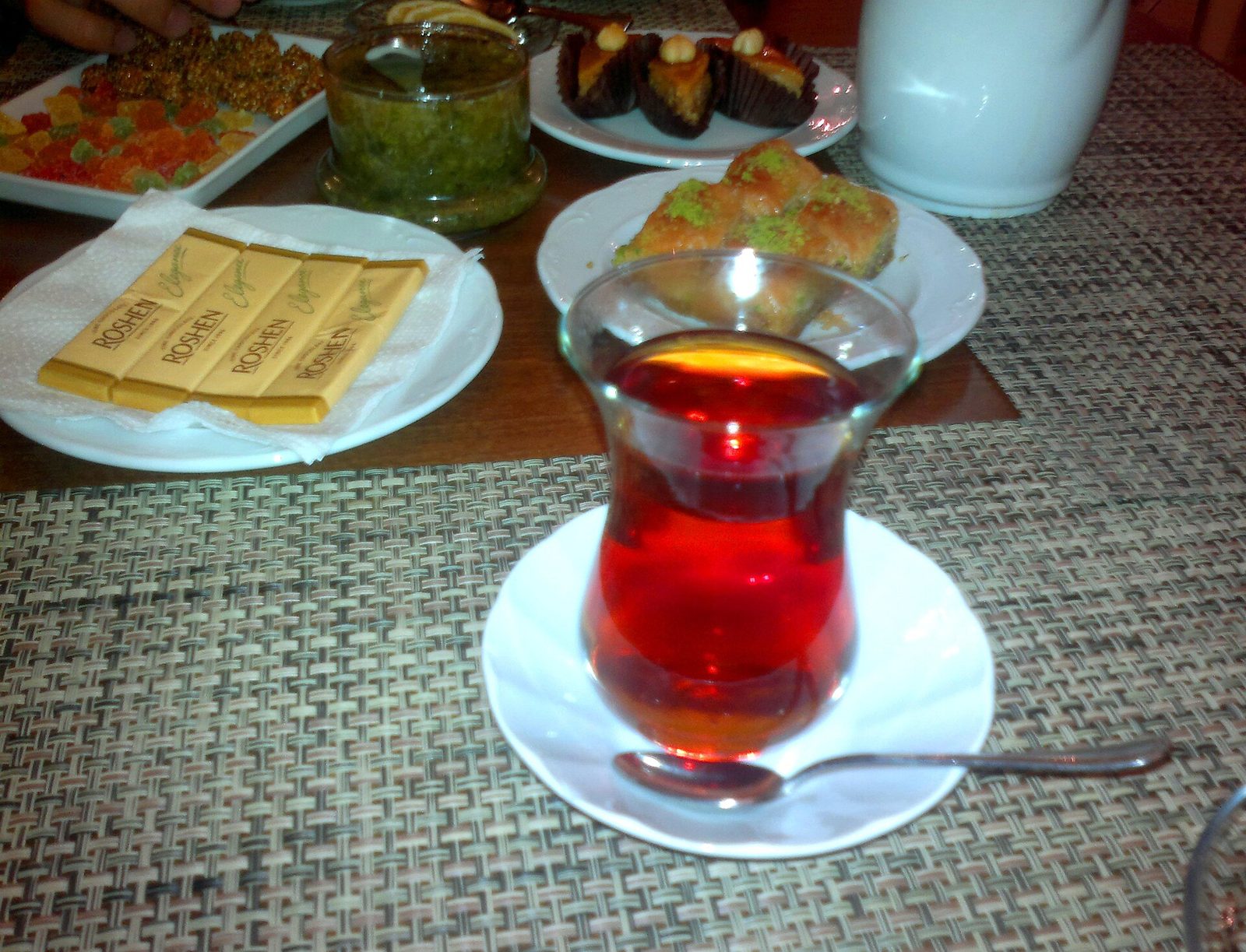
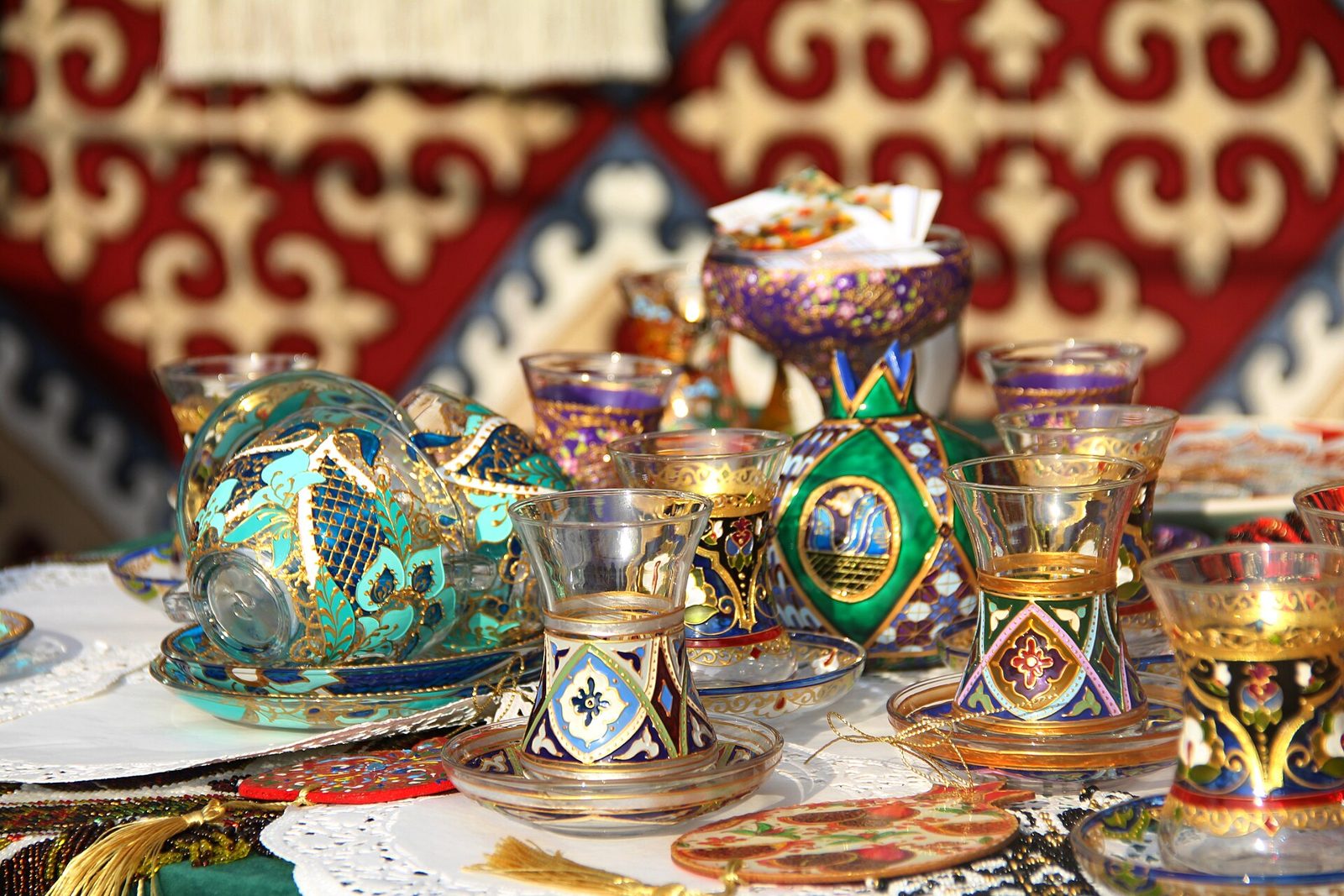
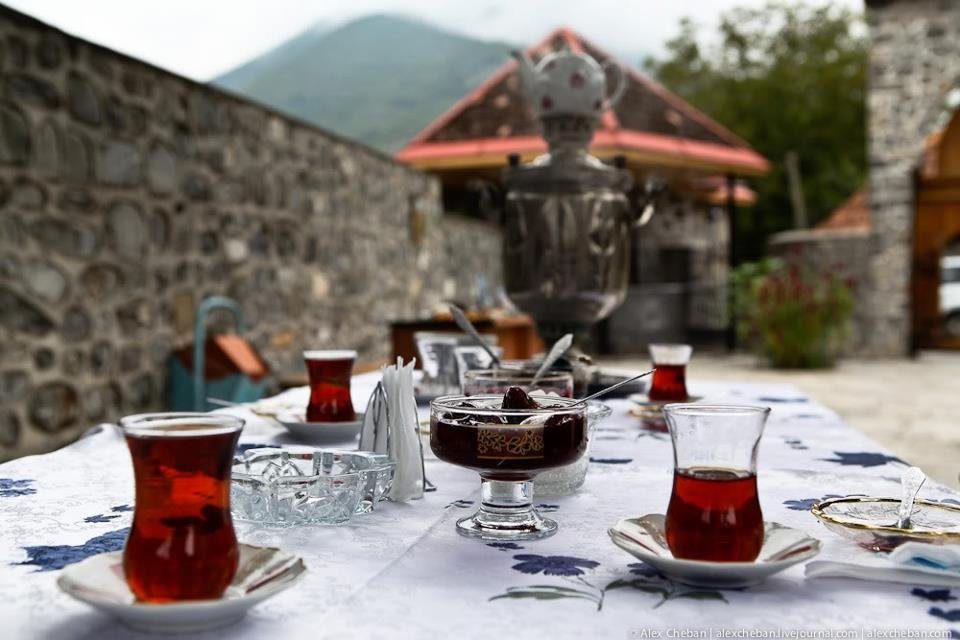
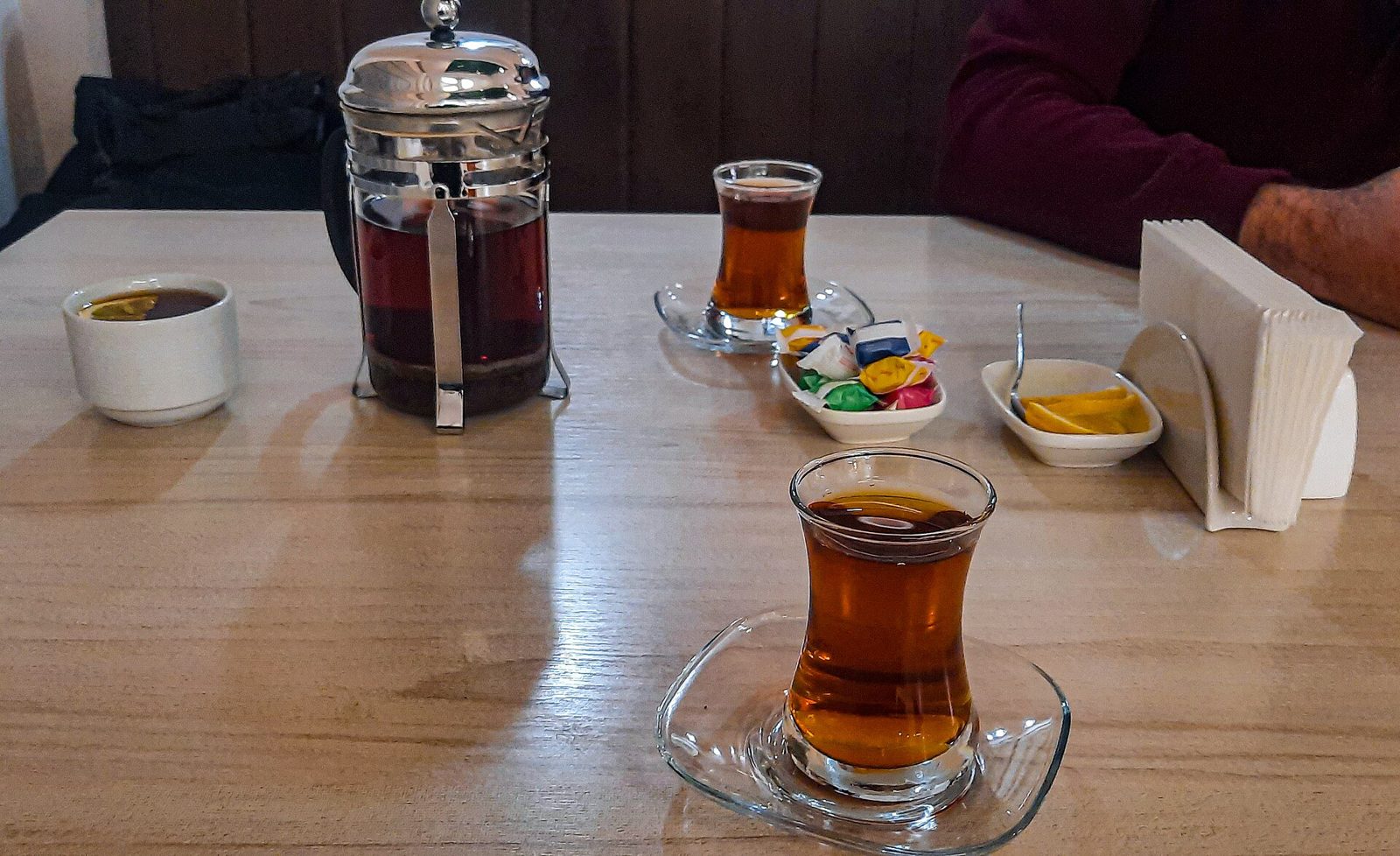
The first thing most visitors notice is the glass. Tea in Azerbaijan usually comes in an armudu, a small clear glass with a narrow waist. Once you see one, the name makes sense: armud means pear.
People will give you several reasons for the shape. The rounded base holds the heat, so the tea stays hot for longer. The narrow middle gives your fingers somewhere to hold. And the flared rim cools a little faster, so the first sip doesn’t scald. How much of that is physics and how much is folklore is open to debate, but anyone who has used one will tell you it works.
The clear glass matters too. Hosts want you to see the colour, and a good brew should glow a deep reddish amber, bright rather than cloudy. In Azerbaijan, the colour of the tea is the first sign of a well-made pot.
Where does Azerbaijani tea come from?
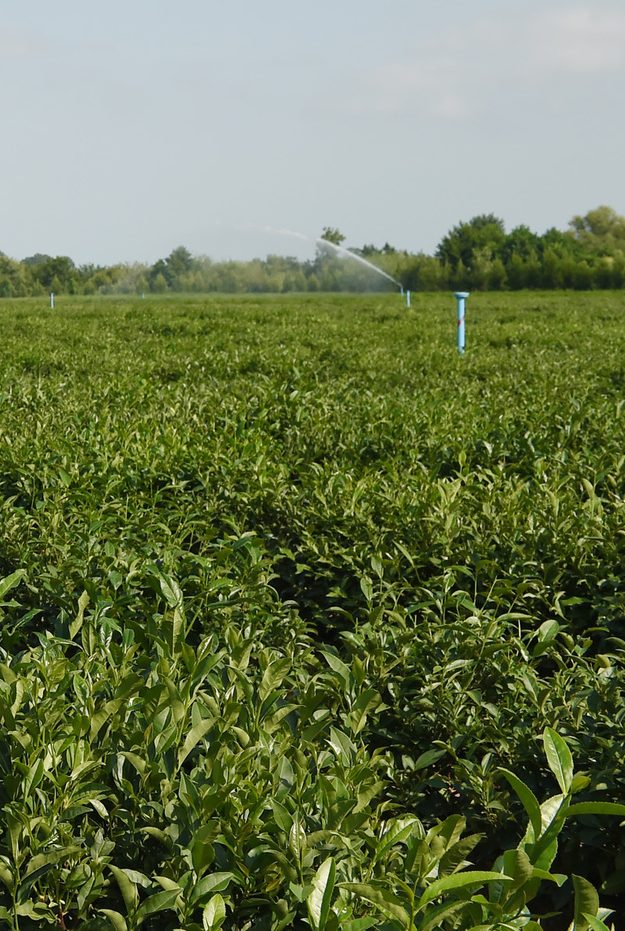
Most people don’t picture tea fields when they think of the Caucasus. But in the far south-east of Azerbaijan, around the towns of Lankaran, Astara and Masalli, the climate is warm, wet and humid, squeezed between the Talysh Mountains and the Caspian. It is one of the few places in the region where the tea bush grows happily.
Experimental planting began in the late nineteenth century, when a Russian botanist, M. O. Novoselov, tried growing tea near Lankaran. Large commercial plantations followed in the 1930s, and Lankaran’s first tea factory opened in 1937. Output peaked in the Soviet era, fell sharply after 1991 and has been recovering in recent years.
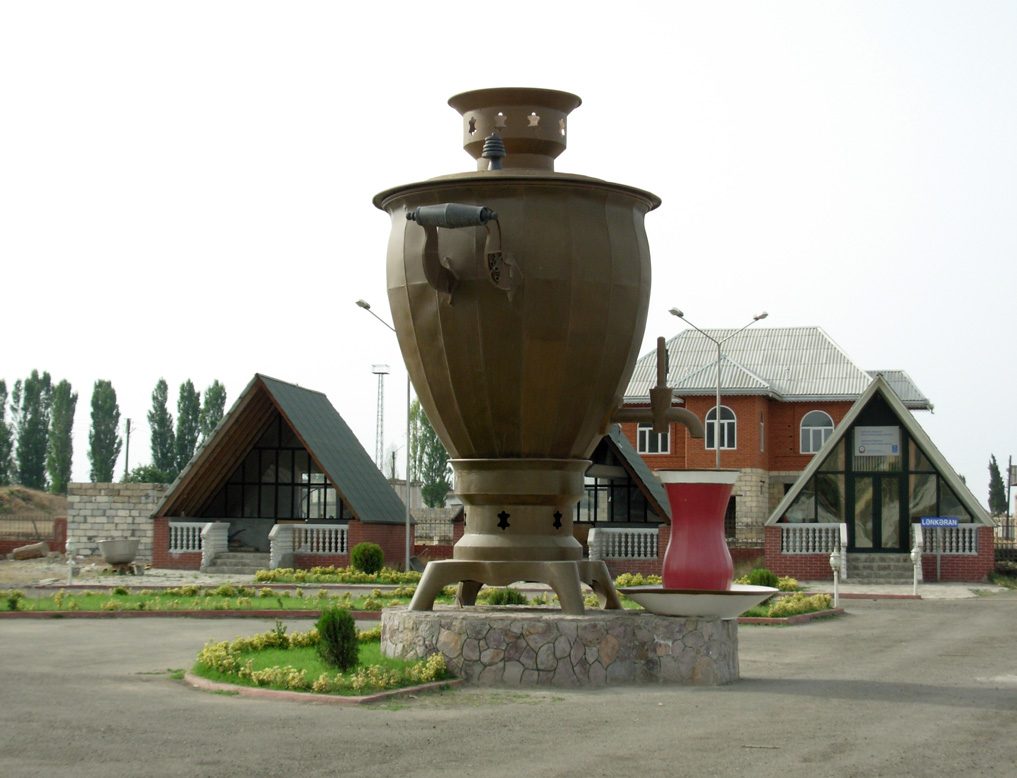
What is a samovar?
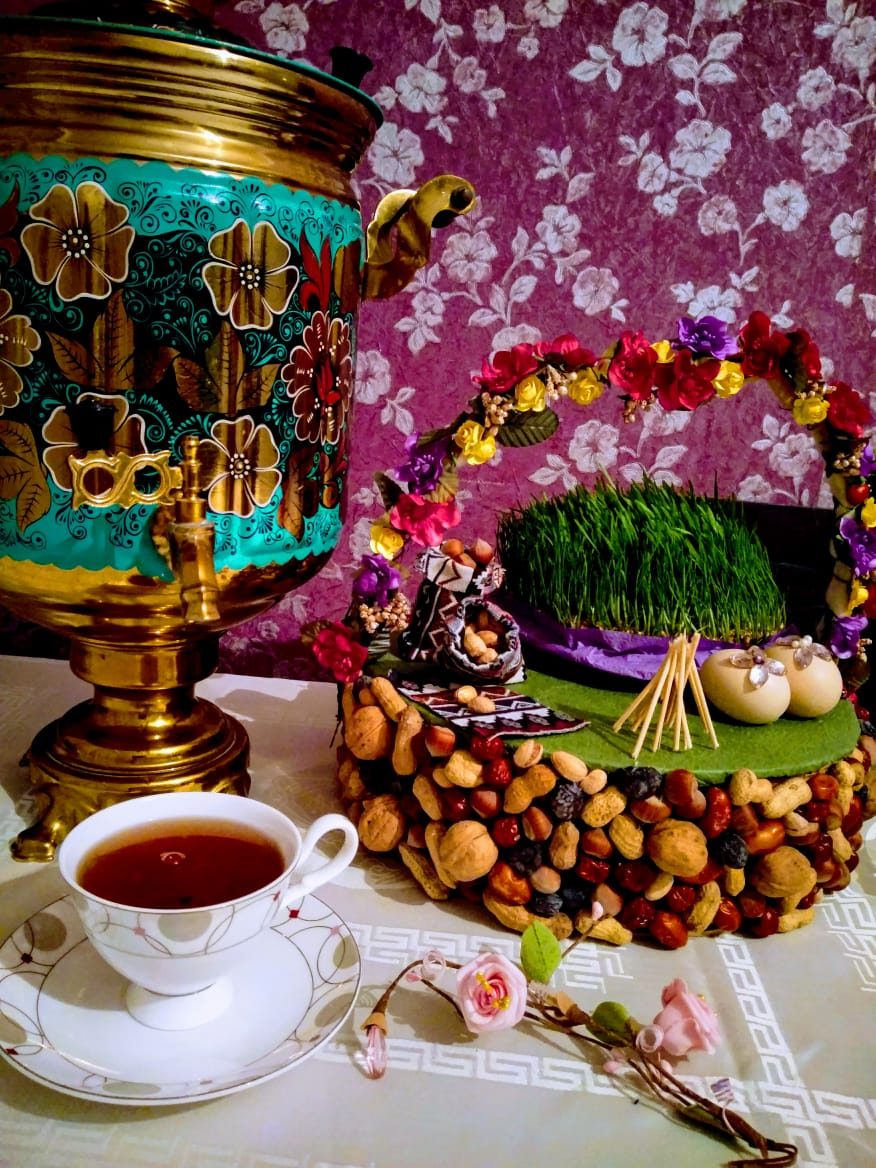
A samovar is a metal urn with a chimney running up through the middle. Traditionally it was heated with wood or charcoal and could keep water hot for hours. A small teapot of very strong tea sits on top, kept warm by the rising heat.
The idea is simple and rather clever. The strong tea in the pot is called dəm. Each person gets a splash of it in their glass, topped up with hot water from the samovar, so everyone can have it exactly as strong or as weak as they like. Think of it as a teapot and a hot-water jug on the table at once, a set-up plenty of British grandparents would recognise.
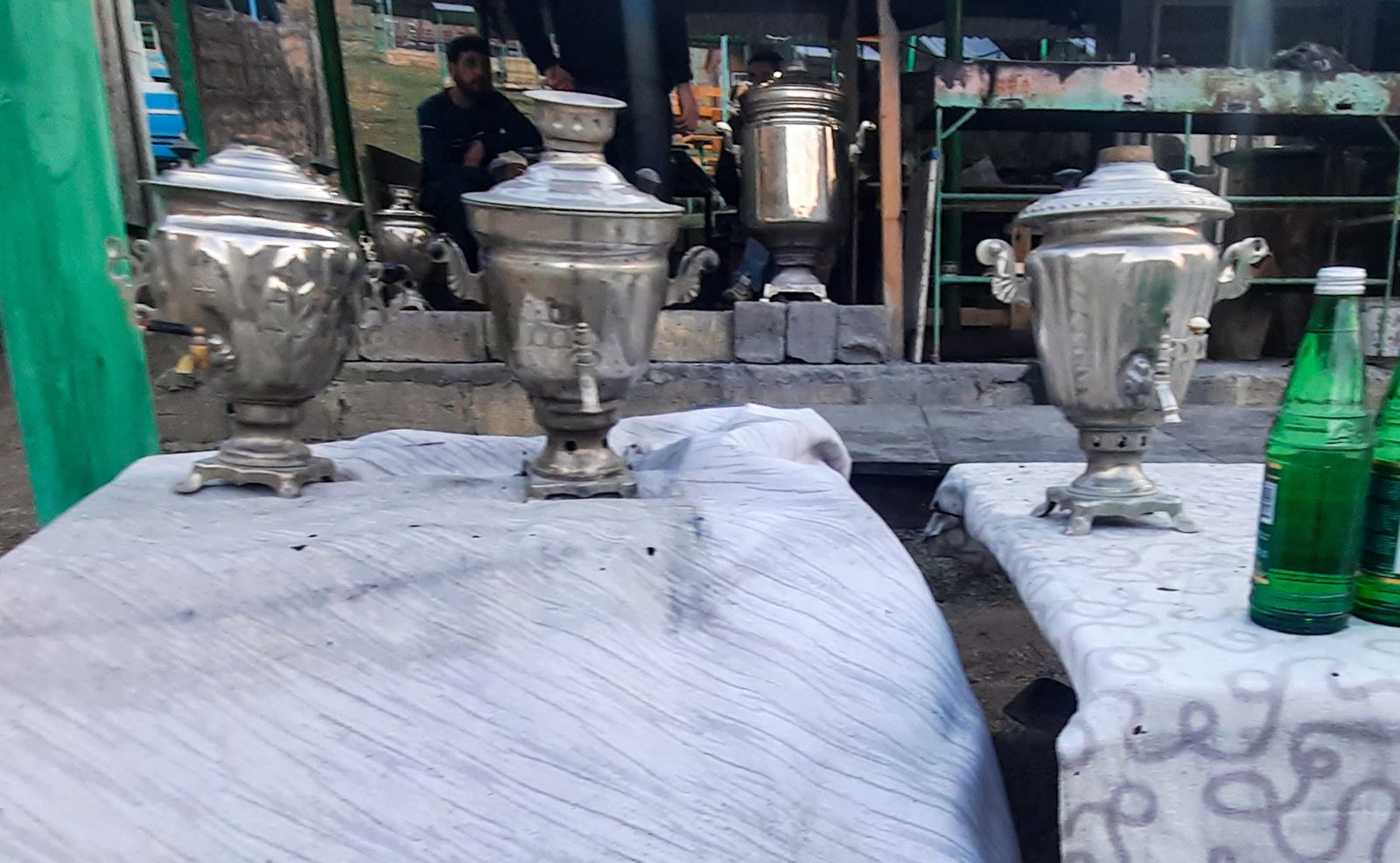
Electric samovars are common in homes now. But at picnics, in mountain villages and outside roadside tea houses, you will still see the old kind, smoking away.
What happens in a chaykhana?
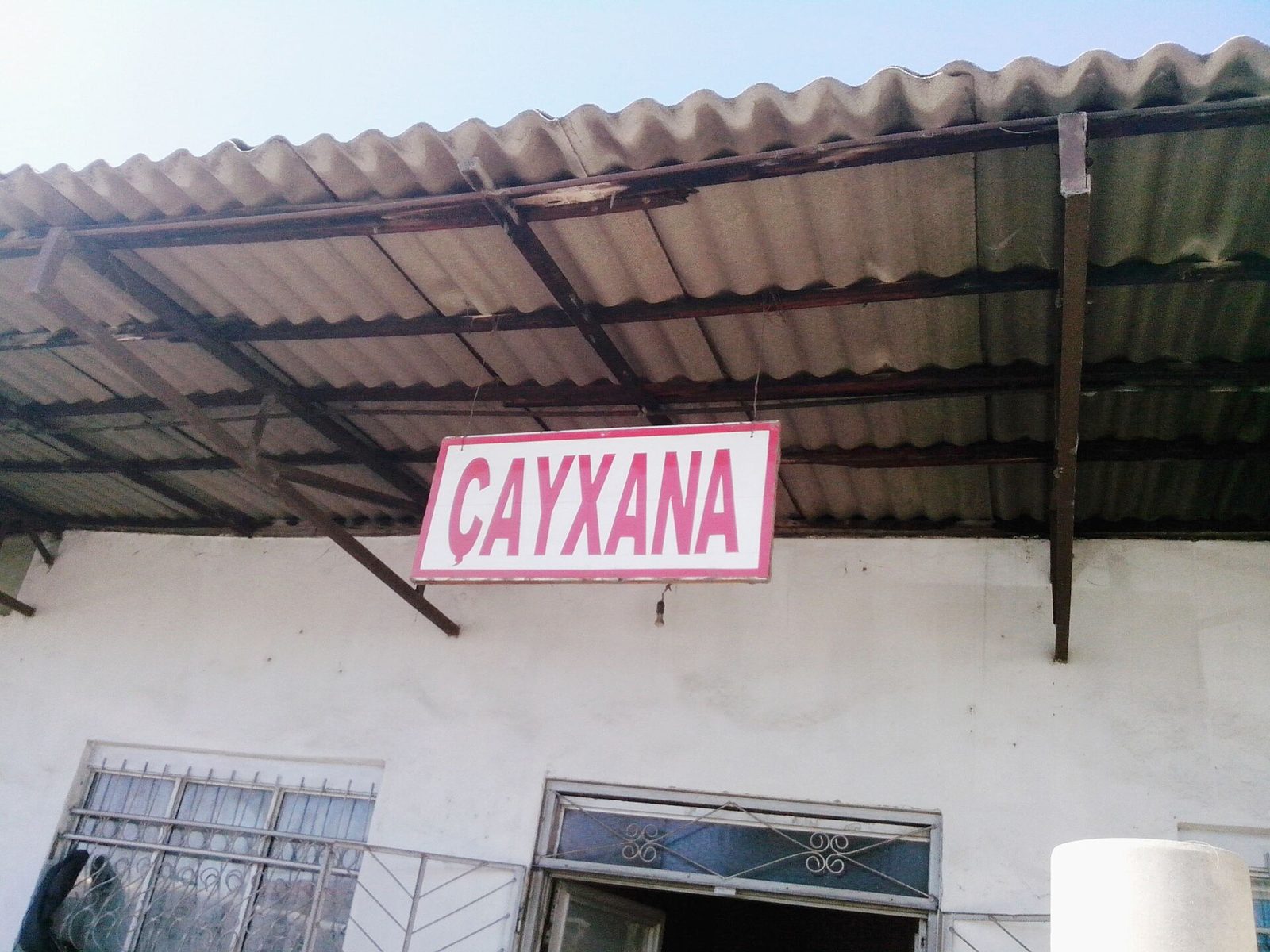
If the samovar is the heart of Azerbaijani tea, the chaykhana (tea house) is its living room. Almost every town and village has one, and in some neighbourhoods you will find one on every corner.
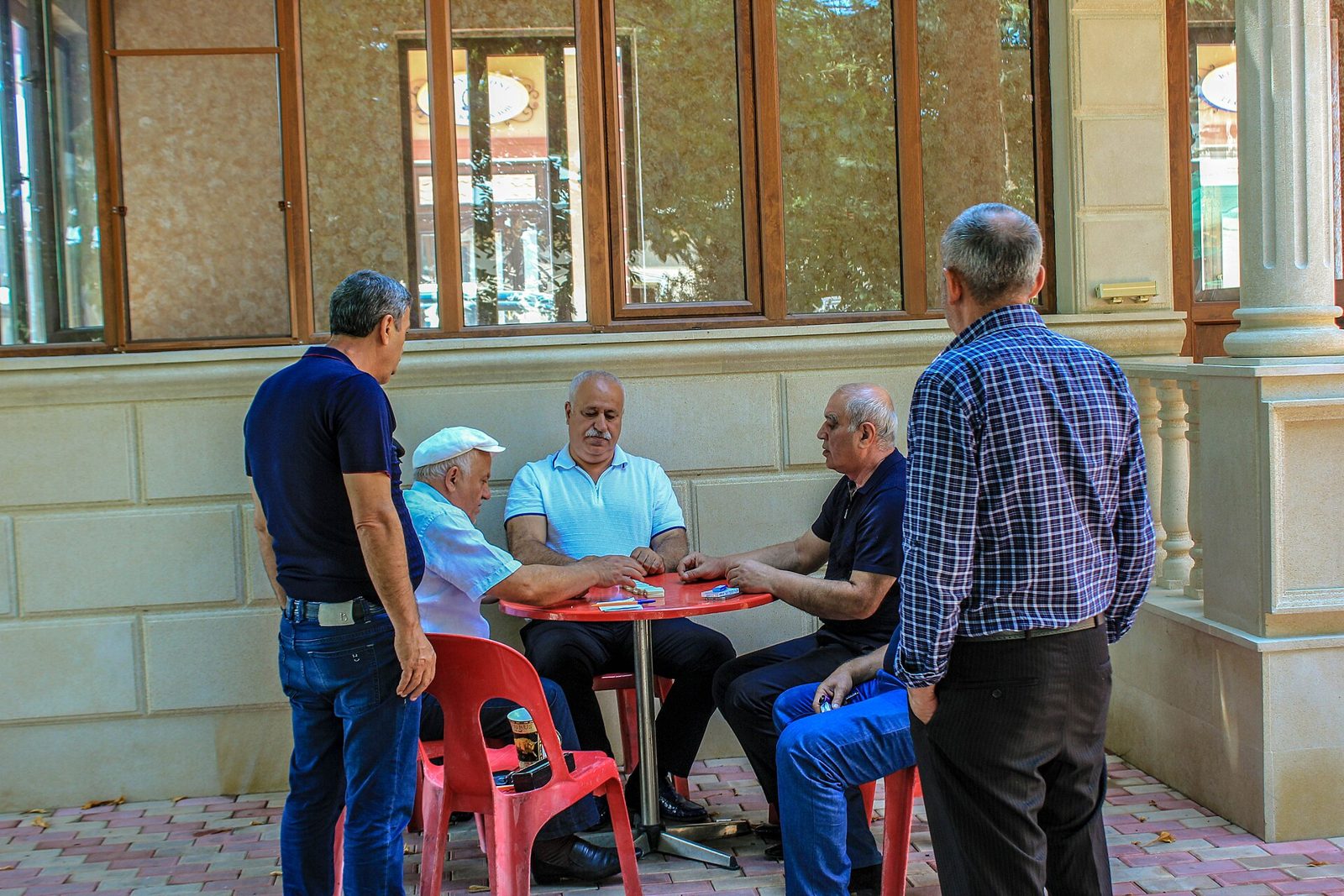
A traditional chaykhana is simple: a few tables, plain chairs, a samovar that never goes cold. Regulars come to drink tea, read the paper, talk about football and politics, and play nard (backgammon) or dominoes. Traditionally they have been older men, though in the cities that is changing fast. Nobody hurries you. One pot can last a whole afternoon.
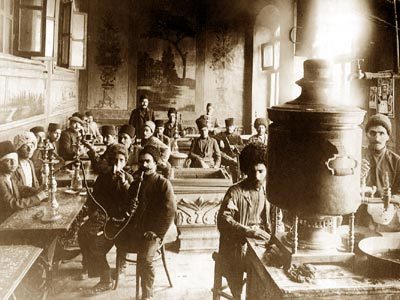
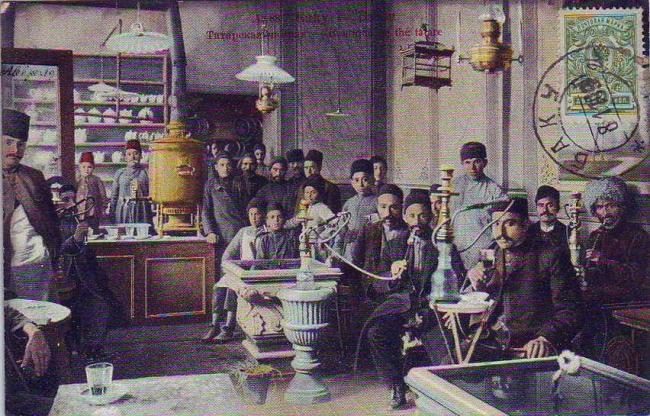
None of this is new. Photographs of Baku tea houses from more than a century ago show rooms that look remarkably familiar, right down to the enormous samovar in the corner.
Milk, sugar or jam?
This is where British and Azerbaijani habits part company.
Azerbaijanis almost never add milk. The tea is black, and the leaf is chosen to be drunk that way: smooth, bright and not too bitter, even when it is brewed strong. If you are a builder’s tea person, try it without milk once before you decide. A lot of people find they don’t miss it.
Sugar is common, but it often isn’t stirred in. Instead you might see someone dip the corner of a sugar cube in their tea and hold it in the mouth while they sip. It sounds odd, but it sweetens each mouthful without changing the tea in the glass.
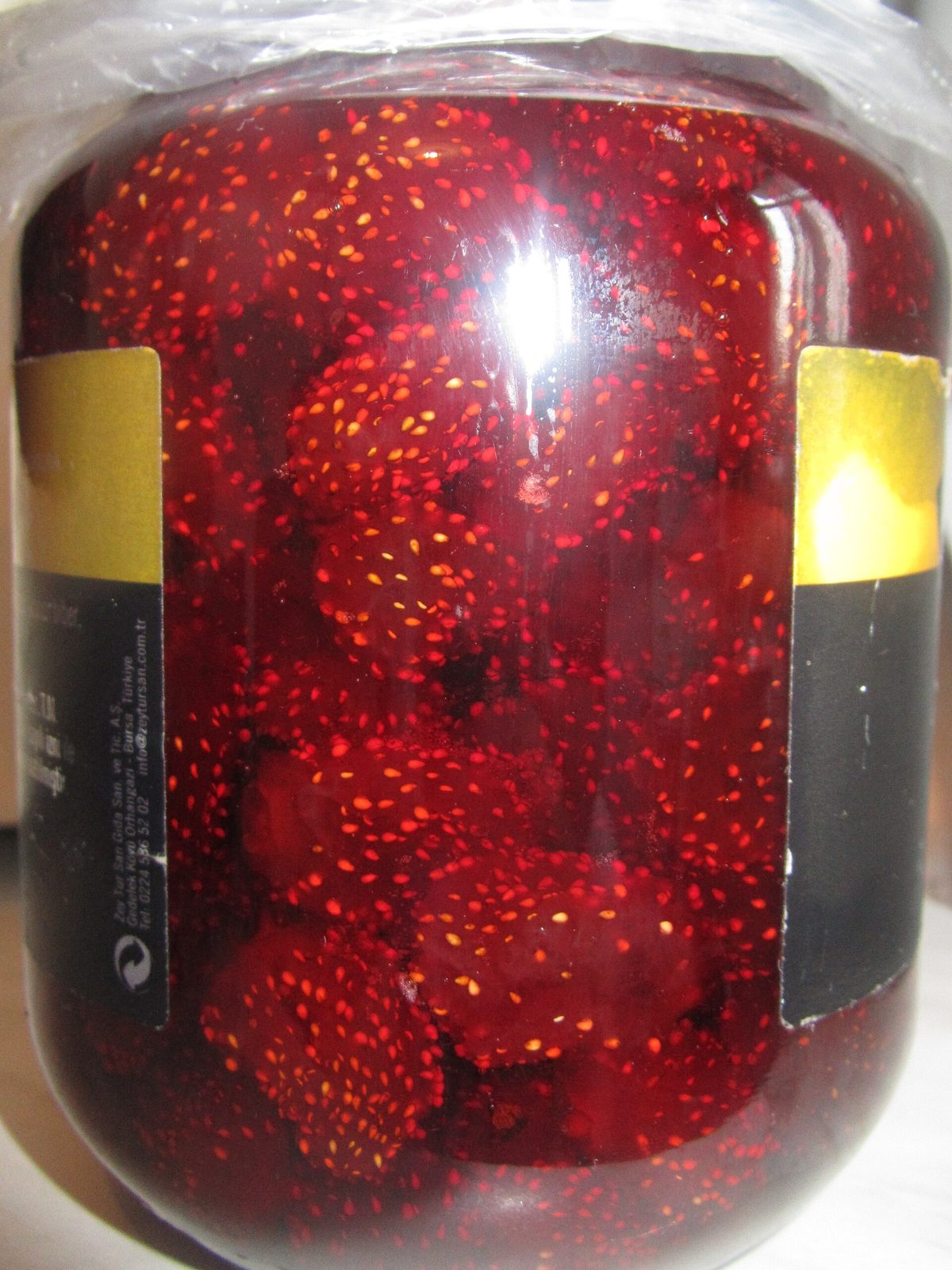
Then there is jam. Mürəbbə (whole-fruit preserves) arrive in little glass dishes, and you eat a spoonful between sips. Cherry, quince, fig, strawberry and white cherry are everyday favourites. More adventurous kitchens make it from green walnuts, rose petals and even aubergine. A thin slice of lemon is popular too, along with dried fruit, nuts and boiled sweets.
What do people eat with tea?
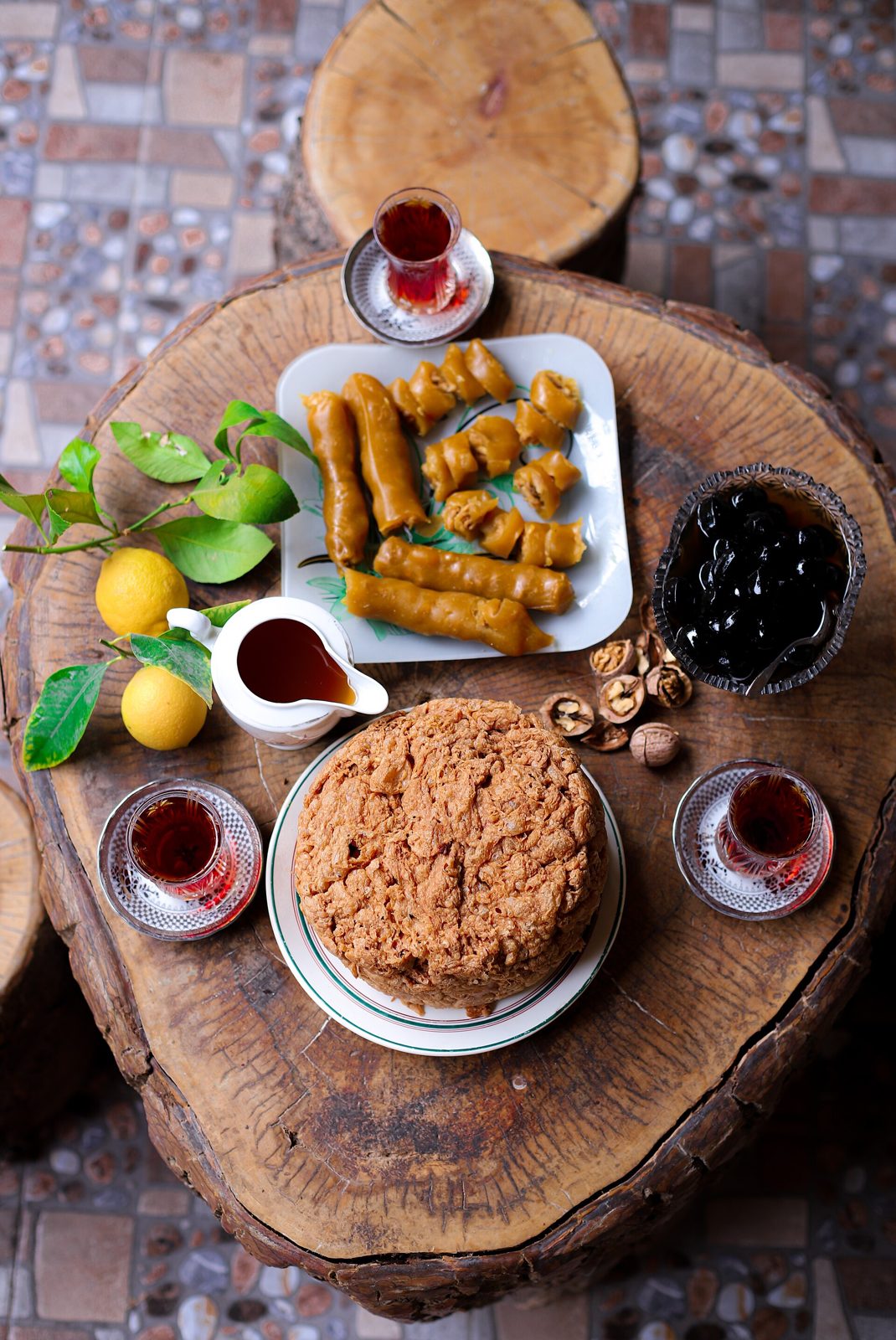
Tea rarely arrives alone. At home the table fills up fast: pakhlava (a diamond-cut pastry of nuts and syrup, a cousin of baklava), shekerbura (a crescent-shaped pastry filled with ground nuts and sugar) and shorgogal (a flaky, spiced bun). These three are the classic sweets of Novruz, the spring new year in March, when the tea flows even more freely than usual.
Unlike in Britain, tea doesn’t just come at the end of a meal. Guests are offered a glass the moment they sit down, and again after eating. In Azerbaijan, tea is how a visit begins.

Can a glass of tea say “yes”?
There is a much-loved story about tea and marriage. In the old matchmaking custom of elçilik, the groom’s family visits the bride’s family to ask for her hand. The answer, so the story goes, came not in words but in the tea. Sweet tea meant yes. Tea without sugar meant no.
How often it really worked like that is anyone’s guess, and these days families tend to use words. But people still tell the story, and it points to something true. In Azerbaijan, the way you serve tea is a message in itself.
So what is Azercay?
If you have had tea in an Azerbaijani home, there is a good chance it was Azercay (Azərçay in Azerbaijani, and often spelled Azerchai or Azerchay in English). It is the country’s best-known tea brand, produced since 1996 by the Sun Tea factory, part of Azersun Holding. Its main factory is in Lankaran, close to the tea fields described above.
The range is large, but a few teas are true household names:
- Buket (Bouquet): the classic everyday black tea, a blend of large and whole leaves that brews a bright red cup.
- Tea with thyme: black tea with wild mountain thyme (kəklikotu), a very traditional pairing in Azerbaijan.
- Bergamot: for anyone who likes an Earl Grey style cup.
- Green tea with jasmine: lighter and floral, and good after a heavy meal.
Half the fun is the packaging. Some Azercay tins borrow directly from Azerbaijani design, including one shaped like an armudu glass and another modelled on the Maiden Tower, the twelfth-century landmark in Baku’s old city.


How do I make Azerbaijani tea at home?
You don’t need a samovar. A teapot, a kettle and a little patience will do.
- Warm the teapot with a splash of boiling water, then pour it away.
- Add loose leaf black tea, roughly one heaped teaspoon per person.
- Fill the pot with freshly boiled water. This is your strong dəm.
- Leave it to brew for five to ten minutes. Many people sit the pot on top of the kettle, or under a cosy, to keep it hot.
- Pour a little dəm into each glass and top up with hot water until the colour is a clear, deep red.
Serve it with lemon, a dish of jam or a few sugar cubes on the side, and see what your guests make of it.
One tip for UK kitchens: much of England, especially the south and east, has hard water, which can dull the colour and leave a film on top of the tea. A filter jug makes a noticeable difference.
In the end, what people remember about tea in Azerbaijan is the time it makes. Someone puts the samovar on, a glass appears in front of you before you have asked for one, and an hour slips by without anyone noticing.
So the next time you put the kettle on, try it their way. Skip the milk, use a glass if you have one, and pour the first one for somebody else. As an Azerbaijani host would say: Çay süzüm? Shall I pour?